
Our Classrooms
Designed to grow with your child

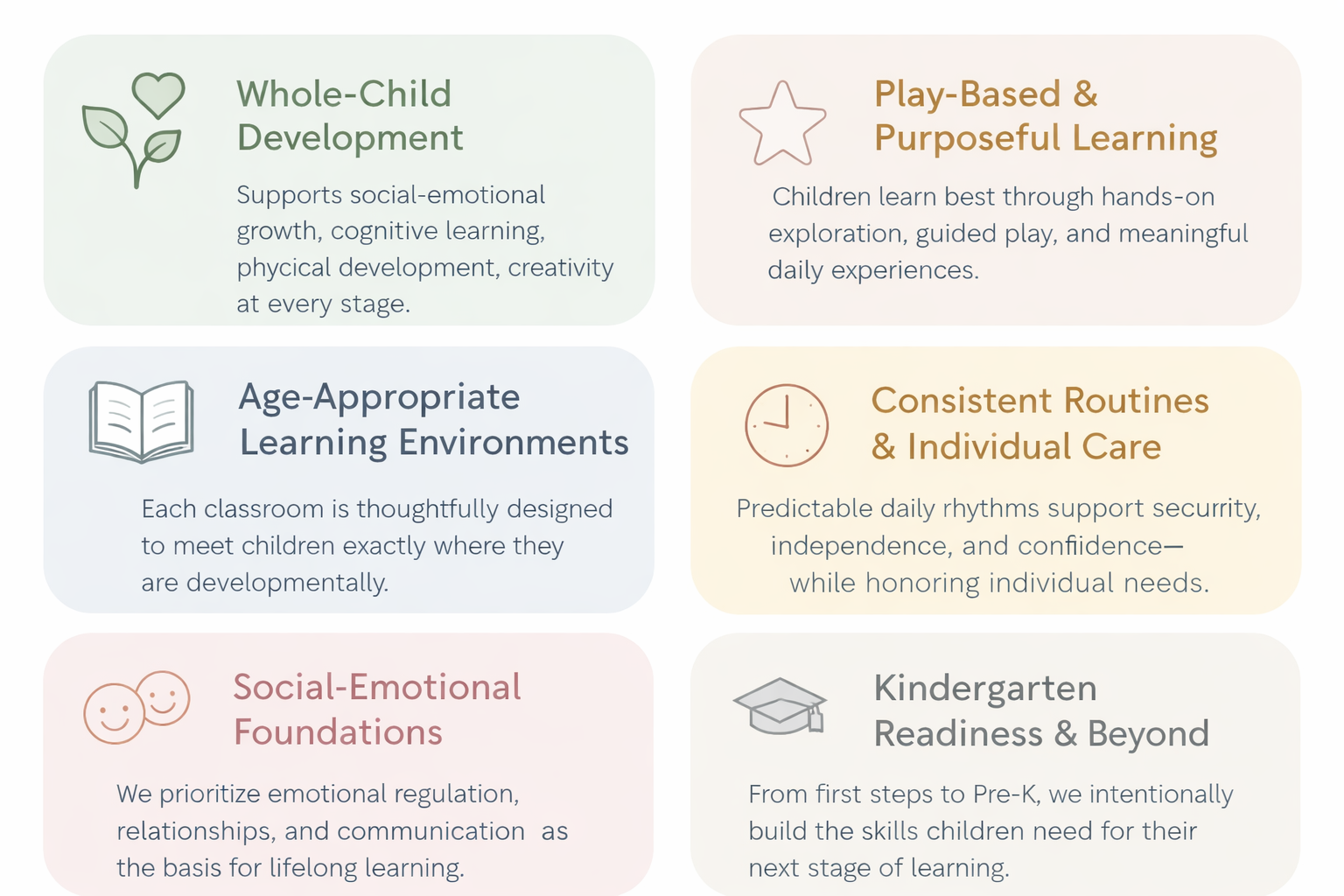
Our Approach to Learning & Care
Classroom Ratios
At Hawthorn Grove, we intentionally maintain classroom ratios that exceed the minimum requirements set by the State of Ohio. Lower ratios allow our teachers to provide more individualized care, stronger relationships, and a safer, more responsive learning environment for every child.
In addition to our dedicated classroom teachers, floating teacher assistants support rooms throughout the day to provide extra hands, guidance, and individualized attention when needed.
| Classroom | Age Range | Teacher-to-Child Ratio | Maximum Group Size |
|---|---|---|---|
| Seeds | 0–12 months | 1:4 | 12 children |
| Sprouts | 12–20 months | 1:4 | 12 children |
| Seedlings | 20–28 months | 1:5 | 14 children |
| Saplings | 28–36 months | 1:5 | 13 children |
| Nursery | 3–4 years | 1:8 | 24 children |
| Grove | 4+ years | 1:10 | 28 children |
Ratios may be adjusted as needed to ensure safety, quality care, and compliance with state licensing regulations.

6 weeks - 12 months
The Seeds classroom provides a nurturing, individualized environment during the earliest stage of growth. Children follow personalized schedules for feeding, resting, and care while learning through rich sensory experiences that engage touch, movement, sight, and sound. With a higher staff-to-child ratio than required by state licensing, our teachers offer attentive, responsive care that supports each child’s remarkable growth and limitless potential.
Expected Milestones
During the Seeds stage, infants develop foundational skills through sensory exploration, movement, and responsive relationships.
-
Infants begin expressing emotions and acting on impulses, building early awareness through consistent, responsive caregiving.
-
Curiosity drives exploration as infants actively engage with their surroundings to understand the unfamiliar.
-
Early communication emerges through babbling, including vowel and consonant sounds, as infants respond to voices, songs, and stories.
-
Infants use their bodies to explore cause and effect, reaching, grasping, and moving to accomplish simple goals.
-
Infants notice visual changes in quantity, beginning to recognize differences in the number of objects within their environment.
Typical Day
Each infant’s day is thoughtfully individualized to reflect family preferences, developmental needs, and natural rhythms.
-
Teachers welcome each child and provide attentive care, including diapering, feeding, and comfort throughout the day.
-
Floor play and guided experiences encourage movement, discovery, and engagement with tactile, visual, and auditory materials.
-
Naps and meals occur on individualized schedules, supporting healthy growth and emotional security.
-
As infants grow, they participate in gentle movement activities and small group interactions that build strength, coordination, and connection.
-
The day concludes with quiet play and nurturing routines as children prepare to head home.

12 - 20 months
The Sprouts classroom supports early walkers as they explore their world with growing curiosity and confidence. This stage is all about learning through exploration in a language-rich environment filled with songs, simple directions, books, and social moments. Children practice early communication, build relationships, and develop independence as they begin to show the first signs of emotional awareness and problem-solving.
-
Children begin managing emotions by comforting themselves in familiar ways and seeking reassurance from trusted adults.
-
Sprouts develop a growth mindset through curiosity, exploring new materials and experiences to better understand their environment.
-
Communication becomes more purposeful as children use single words, gestures, and sounds to express needs and ideas.
-
Children experiment with simple problem-solving strategies, learning through cause-and-effect play and repetition.
-
Sprouts begin understanding basic quantity concepts, showing awareness of ideas like more, all, or none through words or actions.
Expected Milestones
During the Sprouts stage, children experience rapid growth in communication, emotional regulation, and cognitive understanding.
-
Children arrive to a calm, welcoming environment with floor play, familiar toys, and nurturing routines to ease into the day.
-
Group experiences include music, nursery rhymes, sensory activities, and simple interactions that encourage language development and engagement.
-
Diapering, meals, and naps are thoughtfully integrated throughout the day, honoring each child’s personal schedule and developmental stage.
-
Teachers guide short lessons, book exploration, and hands-on activities that support early communication and cognitive growth.
-
Weather permitting, children enjoy stroller or wagon walks and movement opportunities that promote gross motor development.
-
The day winds down with books, puppets, music, and independent or small-group play as children prepare to head home.
Typical Day
Our days follow a gentle, predictable rhythm designed to support each child’s individual needs while encouraging exploration and connection.

20 - 28 months
Our Seedlings classroom supports toddlers as they navigate big emotions, growing independence, and rapid physical development. Children build gross and fine motor skills, practice early self-help routines like using utensils, and explore sorting, color, and shape concepts through hands-on play, early educational technology experiences, and gentle interactions with classroom pets.
Expected Milestones
Children are growing rapidly in independence, communication, and curiosity. During this stage, we support development across key areas through play-based, responsive learning experiences.
-
Children begin learning to manage emotions and actions, practicing accepting limits and making choices with guidance from trusted adults.
-
Seedlings develop confidence and a growth mindset as they become more aware of their own abilities and take pride in accomplishing simple tasks.
-
Language skills expand as children start combining words into simple two-word phrases to express needs, ideas, and feelings.
-
Children explore problem-solving by trying different strategies when faced with new challenges.
-
Seedlings begin understanding number relationships, including recognizing that adding objects creates a larger group.
-
Children are greeted warmly and ease into the day through free play, exploring toys, books, and familiar routines.
-
Group time includes songs, stories, movement, and simple discussions, along with table activities and learning centers that build early academic and social skills.
-
Time in the playground, motor room, or on walks allows children to build strength, coordination, and confidence through active play.
-
Children enjoy a shared lunch followed by rest or quiet activities, supporting healthy routines and self-regulation.
-
Afternoons include art, music, dance, sensory play, and open-ended exploration, ending the day with relaxed free play as children prepare to head home.
Typical Day
Each day is thoughtfully designed to balance structure, play, movement, and rest—supporting toddlers’ natural rhythms and developmental needs.

28 - 36 months
The Saplings classroom supports growing independence, social connection, and confidence. At this stage, children are eager to participate in daily routines, build friendships, and explore pretend play. Teachers focus on toileting readiness, following directions, and expanding language as children begin communicating in short conversations. With nurturing guidance, these young saplings strengthen their roots as curiosity, independence, and self-expression continue to blossom.
-
Children gain greater control over actions and emotional expressions while navigating peer relationships.
-
A growth mindset emerges as children learn that persistence and effort help them master new challenges.
-
Communication expands into simple three- and four-word sentences to express ideas, needs, and requests.
-
Children solve problems by questioning, planning, and completing a sequence of actions.
-
Saplings begin understanding subtraction concepts, recognizing that taking objects away creates a smaller group.
Expected Milestones
During the Saplings stage, children deepen emotional regulation, problem-solving, and communication skills through structured play and daily routines.
Typical Day
Each day blends structure, movement, learning, and rest to support confidence and independence.
-
Children arrive to a welcoming environment with free play and opportunities to practice self-help routines, including toileting.
-
Large-group experiences encourage listening, participation, and following multi-step directions.
-
Children explore hands-on activities that support creativity, early academics, and cooperative play.
-
Daily movement through outdoor play or the motor room supports physical development and energy release.
-
Children enjoy lunch followed by a nap or quiet activities to recharge.
-
The day concludes with table activities, stories, and relaxed play as children prepare for home.

36 - 48 months
The Nursery classroom offers a preschool-style environment focused on creativity, early academics, and social development. Children engage in hands-on learning through play, STEM exploration, and guided lessons that build a strong foundation for future learning. With the introduction of educational technology and collaborative projects, children’s confidence grows as their ideas, independence, and imagination flourish.
Expected Milestones
In the Nursery classroom, children refine academic readiness, emotional regulation, and higher-level thinking skills.
-
Children use their senses and self-awareness to regulate reactions and maintain focus.
-
Confidence grows as children recognize and express pride in their expanding abilities.
-
Children communicate using complete sentences that include descriptive language and prepositions.
-
Problem-solving becomes more advanced as children plan, question, and follow through with solutions.
-
Children understand that groups can be separated into smaller parts and combined back together.
Typical Day
Days are thoughtfully structured to balance academic learning, creativity, movement, and rest.
-
Children begin the day with free-choice centers that encourage independence and decision-making.
-
Group lessons and creative projects introduce pre-academic concepts while fostering collaboration.
-
Books, routines, and self-care activities support literacy and independence.
-
Children build strength and coordination through playground and motor room experiences.
-
A shared lunch is followed by rest to support focus and well-being.
-
The day winds down with movement, snack, and free-choice play as children prepare to go home.

Pre-Kindergarten
Our Pre-K Grove classroom prepares children for a confident transition into Kindergarten by strengthening academic readiness, independence, and self-expression. At this stage, children share stories, use advanced language, and apply early learning standards across subjects. With intentional instruction, collaborative learning, and supportive guidance, the culmination of Hawthorn Grove’s care and expertise comes to life each day.
Expected Milestones
Children demonstrate advanced skills across emotional, academic, and cognitive domains.
-
Children practice delaying gratification and managing emotions during group experiences.
-
A strong growth mindset is evident as children recognize and celebrate the achievements of others.
-
Children communicate clearly using complex sentences with descriptive language and structure.
-
Children explain their reasoning and reflect on problem-solving strategies.
-
Children add and subtract within small sets using concrete objects.
Typical Day
Days are thoughtfully structured to balance academic learning, creativity, movement, and rest.
-
Children settle in through free play and connection with peers.
-
The day includes physical activity, mindfulness, and large-group discussions to support focus and well-being.
-
Teachers guide focused instruction and hands-on learning aligned with Kindergarten readiness.
-
Balanced use of literacy, educational technology, and nourishment supports engagement.
-
Children enjoy lunch followed by rest or quiet activities.
-
The day concludes with group activities, outdoor play, and relaxed free time before heading home.